Dear Friends and Colleagues in WFITN,
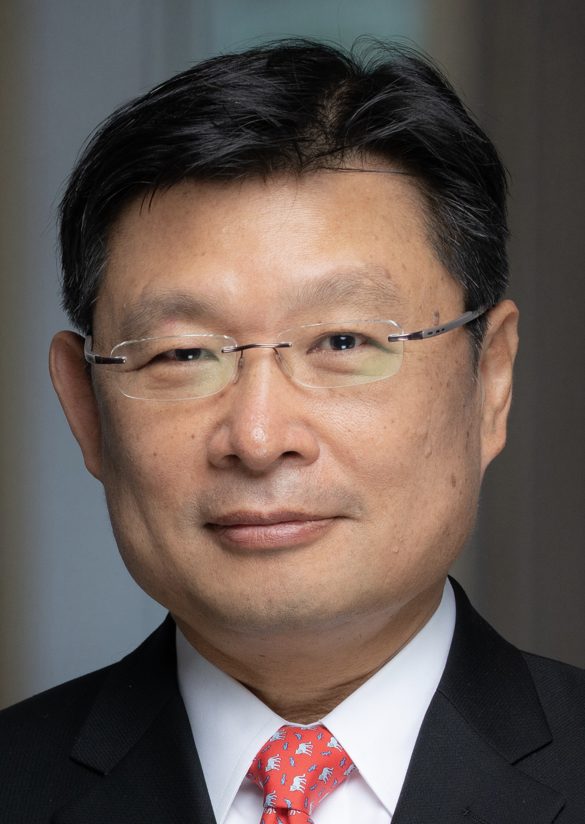
It is the honor of my professional life to stand before you today as President of the World Federation of Interventional and Therapeutic Neuroradiology.
And to do it here, in Korea — where I grew up, where I studied medicine, where this journey began — is a special joy. I could not stand here without my mentors, colleagues, and friends — and most of all my parents, my children, and my better half. I owe you so much.
When WFITN was founded in 1991, only a handful of physicians in the world performed neurointerventional procedures. Our founders — pioneers from Europe, North America, and Asia — built this Federation on three principles: understand the disease from its foundations, educate the next generation, and practice ethically.
Those three principles are still our compass today.
Thirty-five years later we are over 1,000 members worldwide — still the only global organization devoted to neurointervention — and since 2019 our Federation Assembly has united 22 societies on six continents.
Look at us now. Mechanical thrombectomy has turned acute ischemic stroke from a life of permanent disability into a treatable emergency.
Flow diverters. New embolic materials. Lower-radiation imaging. Catheters that go where we never imagined. And now artificial intelligence and robotics. Neurointervention stands at the very forefront of medical innovation.
But with this success comes responsibility.
Here is the question that I ask myself all the time: are we training neurointerventionists, or are we educating them?
Training teaches the how — how to navigate a catheter, how to deploy a device, how to place coils.
But education is larger.
It is anatomy, physiology, embryology, natural history, and ethics — the whole disease, and the patient. Education shifts your focus from the aneurysm to the person carrying the aneurysm. It tells us not only how, but whether. And when.
The late Dame Clare Marx said it best: good surgeons know how to operate. Better surgeons know when to operate. The best surgeons know when not to operate.
Today our devices are so good, and our techniques so refined, that we can treat almost any neurovascular lesion. Almost any.
So, the hardest decision in our field is no longer technical. The decision we make goes beyond the picture on the screen.
We must decide for the patient and the family in the waiting room — not for the aneurysm. And sometimes that means having the courage to say out loud: this patient is better served if I do nothing.
You cannot download that judgment. It comes from deep knowledge, from respect for our patients, and from the values you hold. But education takes time — and our young colleagues have less of it than any generation before them. More than a hundred papers on neurointervention are published every week. A hundred! How can anyone keep up?
Recorded lectures and webinars help. But they are not enough. So what will we do about it? With your support, three things.
First: expand our Neurovascular Anatomy Course.
Our Course in Neurovascular Anatomy is where our deepest knowledge passes from one generation to the next. This year it was held in Zurich, led by my good friends Professor Michihiro Tanaka and Professor Zsolt Kulcsár — and it was a huge success. Once a year is not enough for a global specialty. We will expand it, so that a young fellow on any continent can learn the foundations — not just the techniques.
Second: ethical practice.
Our decisions can be swayed by many factors — patient expectations, our own biases, and yes, industry influence. Our field’s ethical guidance is almost fifteen years old. It was written before mechanical thrombectomy. Before flow diversion. Before AI reached the angio suite. So, together with our Federation Assembly, we will write new standards — and we will promote ethical practice across our field.
Third: inclusion — working together.
Neuroradiologists built WFITN. But it no longer belongs to neuroradiology — it belongs to neurointervention. The patient with a large vessel occlusion does not ask which residency you took. We will work with every society, every specialty.
Because what defines us is not where we came from. It is the disease we treat, the patient we see, and the standards we hold.
Let me close with where I see our field going.
I believe the next great frontier will be neurointerventional oncology — bringing our endovascular precision to brain tumors. Molecular and genetic approaches will reshape how we treat AVMs, dural fistulas, aneurysms, and vasospasm. Artificial intelligence will help us see what we could not recognize before.
Colleagues and friends, imagine a Federation that teaches the disease — not just the technique. That welcomes everyone. That puts every patient first. A Federation our founders would be proud of. A Federation worthy of the patients and families who trust us with their lives. A Federation that every one of you can call home.
Together — I have no doubt — we will make it real.
Thank you for your trust.
And thank you, Busan, for a magnificent congress.
Seon-Kyu Lee, MD, PhD
President